

Midsummer Dinner – Wednesday 15 July 2026
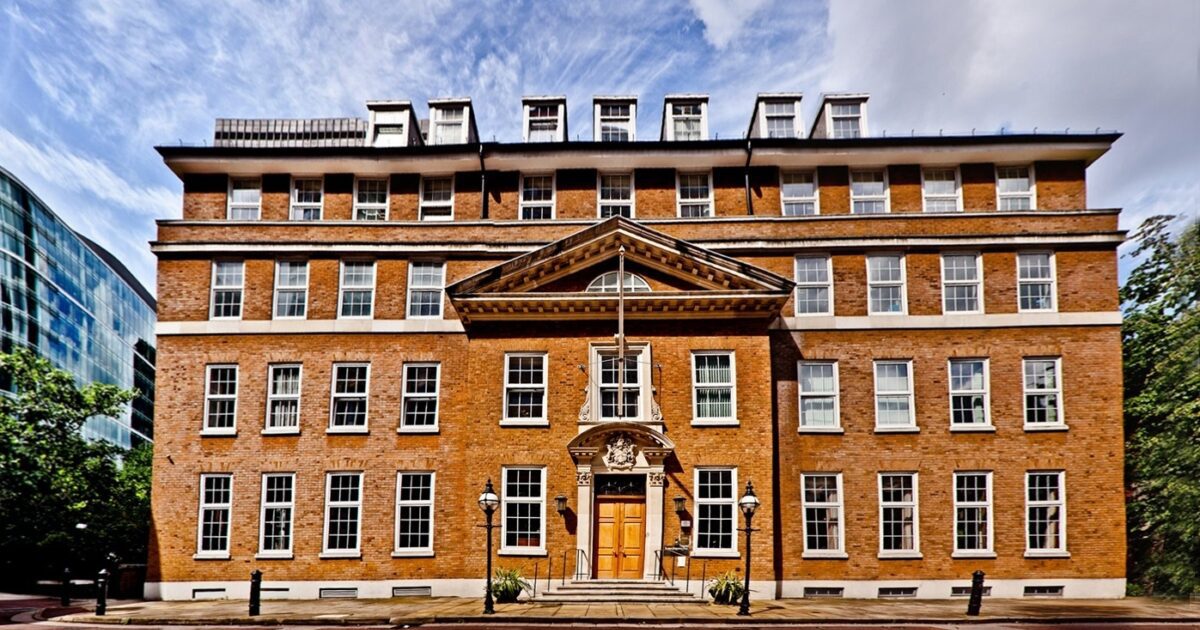
Event Location:
Barber Surgeons Hall, Monkwell Square, London, EC2Y 5BL
Midsummer Dinner
Barber-Surgeons’ Hall
Wednesday 15 July 2026
Midsummer Dinner will be held on Wednesday 15 July 2026 at Barber-Surgeons' Hall. This will be the final formal event of our Master’s year, so please come and support him!
During Ceremonial Court beforehand we will be enrobing Alderman Tim Hailes as an Honorary Liveryman. Subject to election at Common Hall on Tuesday 29 September, Tim will be installed as the next Lord Mayor of the City of London. Tim will be only the second Fueller in our history to ascend to this position in November 2026; this is a historic occasion for our company and the Master hopes that all Fuellers can be present to support Tim - and all candidates - at Ceremonial Court.
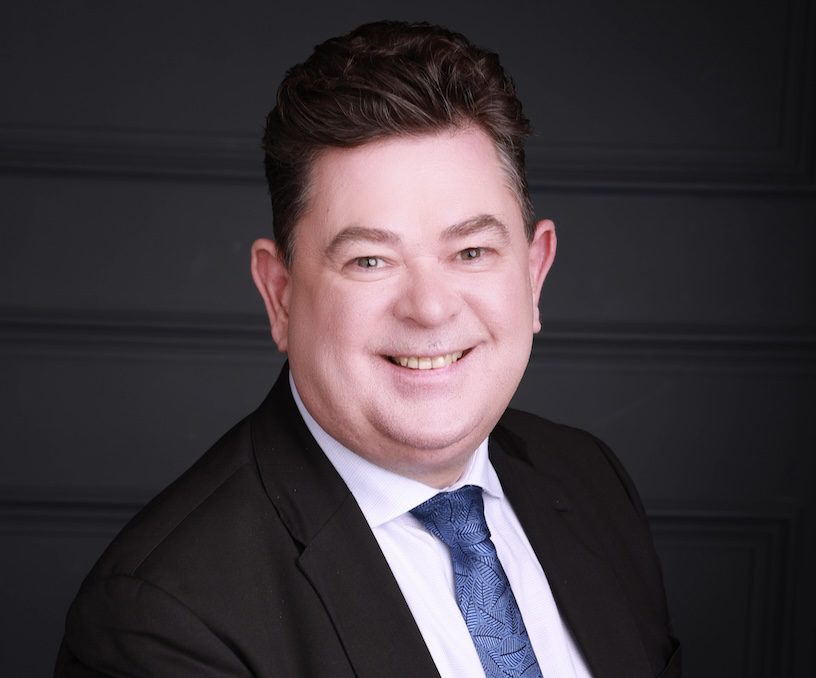
Our Prinicpal Guest is Alderman Tim Hailes, who is currently Senior Alderman Below The Chair (SABTAC) and is supported for progression to be the 698th Lord Mayor of the City of London for 2026/2027.
Tim has served as Alderman for the Ward of Bassishaw since 2013 and was elected Aldermanic Sheriff of the City of London for 2017/18. A long‑standing and committed public servant, he has made sustained contributions to the civic life of the City, including membership of Policy & Resources, City of London Police, Finance, and Children’s & Community Services committees.
Born in Dorchester, Dorset in 1967, Tim was educated at Bristol Grammar School before reading Medieval and Early Modern History at King’s College London. At King’s he served as President of the Students’ Union and worked as a Parliamentary Assistant to two senior members of Margaret Thatcher’s Cabinet. Tim went on to train in law at the University of the West of England, Bristol, qualifying in 1993, and in 2018 was awarded an honorary Doctorate in Law.
After qualifying as a solicitor in private practice, Tim joined JP Morgan in 1999 following experience at UK and US firms, including Wilde Sapte and Cadwalader, Wickersham & Taft. Tim worked at JP Morgan for over 20 years, including as Managing Director and Global Practice Group Head for Equities, and later Global Practice Group Head for Cross‑Border Business.
Alongside his professional career, Tim has been a consistent advocate for equality and inclusion, championing LGBT+ inclusion and was named by the Financial Times as one of the UK’s Top 100 LGBT Executives in 2014 and 2015. He supports a range of charitable organisations including Stonewall, the Human Dignity Trust, Prisoners Abroad and the RNLI. Following his departure from JP Morgan in 2019, he joined Blockthree Holdings Limited as General Counsel and Executive Director, applying his regulatory expertise to the FinTech and digital assets sector until 2024, when he established his own advisory consultancy, Meridian Global Strategies Limited.
Tim has served as a Justice of the Peace in the Central London Justice Area since 2013, is Vice‑Chair of Governors at King Edward’s School, Witley, and serves as Churchwarden at St Lawrence Jewry. He is an active Liveryman of several City Livery Companies. A resident of Greenwich, Tim enjoys historical fiction, strategic games, East Asian culture, fine wine and cooking. A former RYA‑qualified advanced sailing instructor, he spent many summers teaching sea cadets at the Royal Navy School in Weymouth, an experience he recalls with particular pride.
The Worshipful Company of Barbers traces its origins to 1308, when Richard le Barbour was elected by the Court of Aldermen to keep order amongst his fellows. This Company also included surgeons, whose duties had overlapped with barbers for many years, mainly due in the thirteenth century to Pope Honorarius III prohibiting all persons in holy orders from practising medicine in any form. Thus barbers in the monasteries, already used to working with sharp blades, added minor surgical skills to their repertoire, which were in due course passed on to barbers elsewhere.
Within London a Guild or Fellowship of Surgeons, whose Ordinances were approved in 1435, claimed the right to practise surgery which inevitably led to power struggles and disputes. This was temporarily resolved in 1462 when the Barbers’ Company was granted its first Royal Charter by Edward IV establishing its power to regulate the practice of surgery in London. The respective roles of barbers and surgeons in London were finally defined by an Act of Parliament in 1540 which created the Company of Barbers and Surgeons of London. The Act decreed that no surgeon was to perform the tasks of a barber, and vice versa, but both could continue to draw teeth. The Act of Parliament being concerned with the professionalisation of the surgeons, granted the Company four bodies from Tyburn each year for the purpose of dissection for anatomical teaching.
This unhappy iunion continued for two hundred years until in 1745, at the request of the surgeons, a Bill was finally passed and the Surgeons left the Company forming what eventually became the Royal College of Surgeons of England. Prior to the separation the Company was gradually losing its association with barbery, a trend which accelerated after 1745. Although the membership was made up of many different professions, between 1745 and 1919 few surgeons were admitted to the Company. At the institution of the Thomas Vicary Lecture in 1919 the bonds between the Company and the Royal College of Surgeons were re-established and surgeons, including surgeons to the Royal Family and the Royal Household, have been regularly admitted to the Company ever since in memory of the past union.
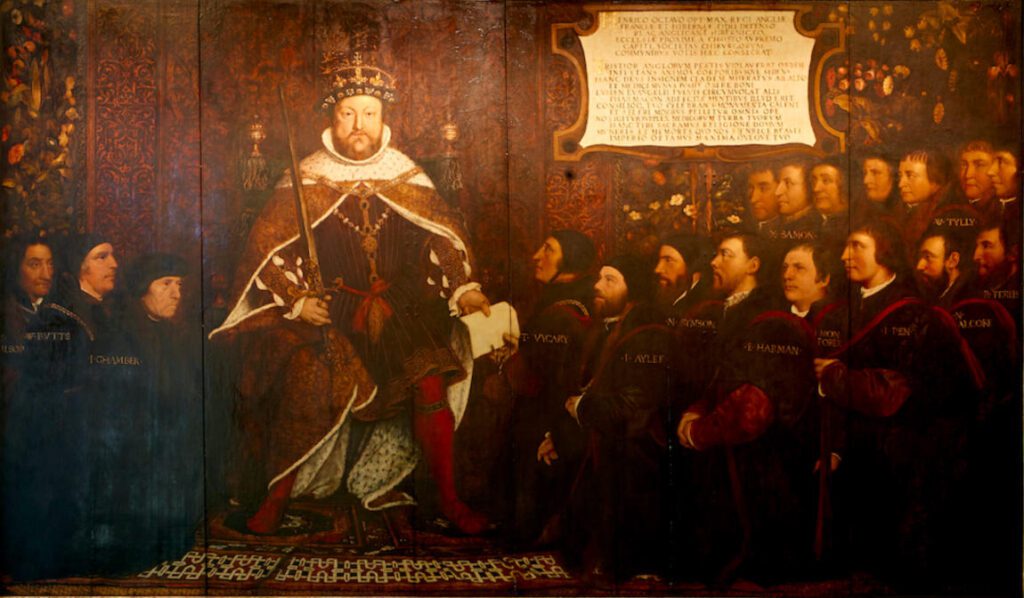
“King Henry VIII and the Barber Surgeons” by Hans Holbein the Younger
‘The Holbein’ is an oil on 11/12 oak panels, in a late 17th Century gadrooned giltwood frame, which shows the King celebrating the Act of Union between the Company of Barbers and the Guild or Fellowship of Surgeons in 1540. Whilst it was commissioned to celebrate this Act of Union, it was probably painted in 1542 and has remained in the possession of the Company ever since.
The Company’s first Hall was built in Monkwell Street in the 1440s and consisted of a hall for dining, a parlour for meetings of the Court, a library and a kitchen. A new Court Room, which was incorporated into bastion 13 of the Roman wall, was completed in 1607 and a new Parlour and an anatomy theatre for lectures and demonstrations followed. The latter was designed by Inigo Jones following the pattern of the famous anatomy theatre in Padua, and was the only Company building to survive the Great Fire of London in 1666.
The second Hall was designed by Edward Jarman whose plan provided for a courtyard, with the main part of the Hall on its west side again using bastion 13 of the Roman wall. The the buildings remaining substantially the same until 1784 when the anatomy theatre was demolished to make way for housing, and then in 1869 economic constraint necessitated the leasing of the dining hall and kitchen areas for warehouse use, with the Company retaining little more than an entrance lobby and Court Room (which became the new dining hall) on the ground floor, and a staircase leading to a committee room and accommodation for the Beadle.
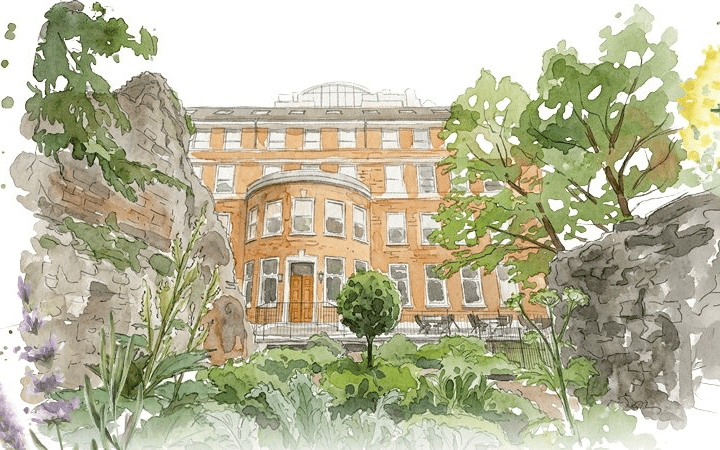
The second hall and its surrounding area were destroyed on 29 December 1940 by incendiary bombs with fires raging for three days, and for the next 29 years the Company was without a home whilst the Corporation of London looked at redeveloping the area. Eventually agreement was reached for a new Hall to be sited 30 feet further east than its predecessor, the shape of the old Hall being mirrored in the new Great Hall by the large bow window on its west side. This was opened on 13 May 1969 by Her Majesty Queen Elizabeth the Queen Mother who graciously accepted the Honorary Freedom of the Company.
In October 1967 Past Master Sir John McNee proposed that the corporation create a physic garden in bastion 13 to the west of the Hall, which was eventually laid out by Past Master Sir Francis Avery Jones in 1987.
TIMINGS
- 1745 Ceremomnial Court
- 1815 Reception
- 1845 Midsummer Dinner
- 2215 Carriages
Tickets cost £165 and you can book places for yourself and your guests on the Company website.
You are advised to book early and please note that Pour Memoires are no longer sent out.
Liverymen are able to claim Tallage, which is now £50 for one event per livery year.
Any Freemen interested in becoming a Liveryman should contact the Clerk.
DRESS CODE
Black tie with decorations and Livery Badges.
BOOKING DEADLINE
Please book your places by Friday 3 July.
LOCATION
Barber-Surgeons’ Hall, Monkwell Square, Wood Street, Barbican, London EC2Y 5BL
View location
CEREMONIAL COURT
There will be a Ceremonial Court immediately before the Reception to formally admit new Freemen, enrobe new Liverymen and also enrobe Alderman Tim Hailes as an Honorary Liverman.
Ceremonial Court follows Election Court and will start promptly at 1745. All members and their guests wishing to support our new Freemen and Liverymen are welcome to attend.
If you are expecting to be admited as a Freeman or enrobed as a Liveryman please contact the Clerk to ensure that you are included.
THE BOOKING DEADLINE HAS NOW CLOSED FOR THIS EVENT
if you are trying to book then please Contact the Clerk who will check if you can be accomodated