A report on the 20th Fuellers Annual Energy Lecture, given by Claudio Galimberti, Chief Economist of Rystad Energy. can be found on social media and an earlier item this news section of the Fuellers web site. The lecture took place at Carpenter's Hall on the 28th September 2026
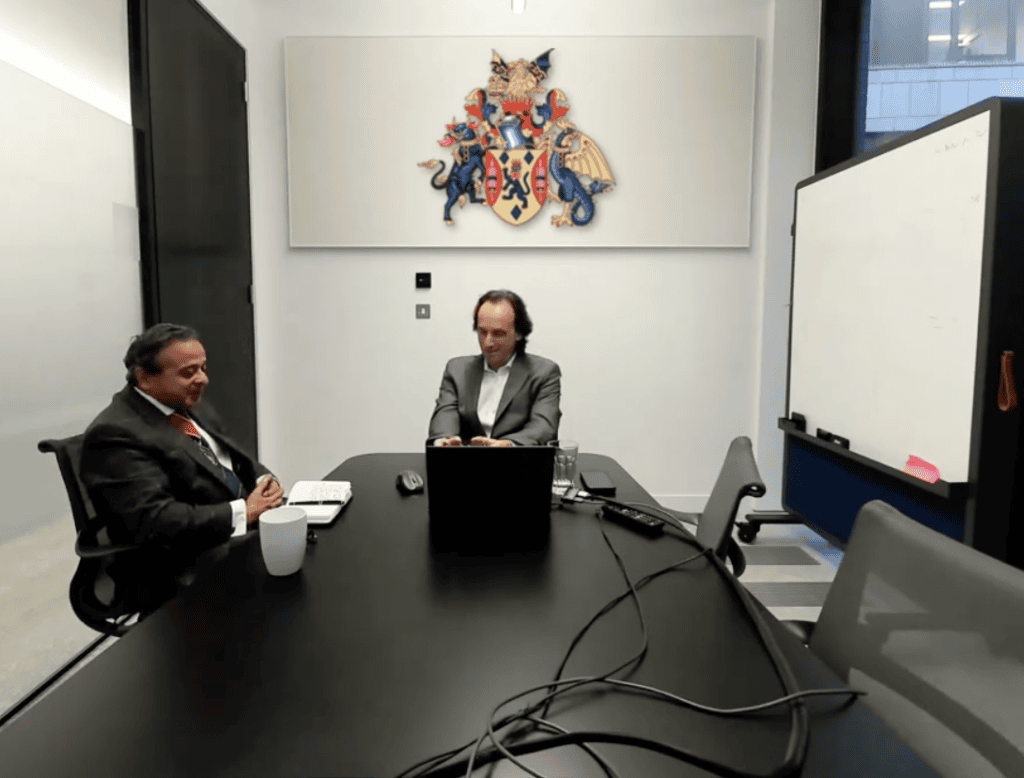
The next day, Past Master Ashutosh Shastri took part in a 24 minute interview and discussion with Claudio Galimberti , which can be found in full at https://lnkd.in/e9RVXArp
The key concepts, generated from the video interview by Google Gemini, were as follows:
Energy Geopolitics & New World Order QuizQuestions
- How is the emerging global energy competition characterized between the United States and China?
- A) The US focuses on coal, while China focuses on nuclear energy.1
- B) The US pursues energy dominance based on oil and gas, while China leads in renewables and electrification.
- C) China relies exclusively on imported oil and gas, while the US relies exclusively on solar and wind.
- D) Both nations are moving away from fossil fuels at the exact same pace.
- In China, what percentage of new vehicle sales is made up of electric vehicles (EVs)?
- A) 35%
- B) 50%
- C) 68%
- D) 82%
- In the energy trilemma framework, how have global government priorities shifted over the past decade?
- A) From Reliability $\rightarrow$ Affordability $\rightarrow$ Sustainability
- B) From Affordability $\rightarrow$ Sustainability $\rightarrow$ Reliability
- C) From Sustainability $\rightarrow$ Affordability $\rightarrow$ Reliability and Security
- D) From Security $\rightarrow$ Affordability $\rightarrow$ Sustainability
- Why is it suggested that it is actually in the strategic interest of oil-producing nations to resolve crises in major trade chokepoints like the Strait of Hormuz?2
- A) High prices sustained over a long period encourage alternative technology adoption, leading to permanently lower long-term demand.
- B) Prolonged crises force oil producers to pay higher taxes to European governments.
- C) Energy crises automatically trigger a global ban on all crude oil imports.
- D) It allows non-OPEC countries to seize all refining assets in the Middle East.
- Which regions have significantly increased their oil production over the last 16 years, offsetting production decreases from OPEC?
- What dilemma will OPEC and OPEC+ face in the near future regarding production levels?
- A) Deciding whether to shut down all North Sea oil fields.6
- B) Choosing between increasing production to regain market share versus restricting output to keep oil prices high for revenue needs.
- C) Switching their entire domestic economies to nuclear power by 2027.
- D) Banning all crude oil exports to Asian markets.
- What is meant by Iran's "dual energy weapon"?
- A) Combining solar energy production with coal exports.
- B) Leveraging both nuclear deterrence and the ability to calibrate oil/cargo flows through the Strait of Hormuz.
- C) Controlling both wind power grids and natural gas pipelines into Europe.
- D) Using refined diesel rationing alongside high domestic EV subsidies.
Answer Key
- B — The US focuses on energy dominance through oil and gas production, while China leads in renewables and transportation electrification.
- C — Electric vehicles account for 68% of new car sales in China.
- C — Government focus shifted from Sustainability(10 years ago) $\rightarrow$ Affordability(post-COVID) $\rightarrow$ Reliability & Security (recent geopolitical conflicts).
- A — Long sustained crises cause structural shifts (fuel efficiency, energy transitions), which permanently lower oil demand over time.
- B — Over the last 16 years, the US increased output by ~10 million barrels/day and Latin America by ~5 million barrels/day, while OPEC decreased output.
- B — OPEC members face a conflict between increasing production to recapture market share or restricting supply to maintain price levels above their fiscal break-evens.
- B — The dual weapon refers to one-time nuclear deterrence combined with the operational control to restrict or permit cargo traffic through the Strait of Hormuz.
Create an audio overview based on this file